Letting go of someone you love quotes can speak to a pain that is difficult to explain. I know how hard it can feel when your heart wants to hold on, but life is asking you to move forward. You may still care deeply, yet sometimes love also means accepting that someone is no longer meant to stay.
If you are struggling to let go, please remember that releasing someone does not mean your love was meaningless. You can miss them, cry for them, and still choose yourself. I want you to know that healing does not happen all at once; it begins with one small decision to stop fighting what you cannot change and give your heart permission to breathe again.
I believe every ending carries a lesson, even when it arrives with heartbreak. You may not understand the reason today, but with time, the memories can become softer and the pain can become a reminder of how deeply you were able to love. Let these quotes help you find the courage to release the past and make room for peace.
Emotional Acceptance and the First Step of Letting Go
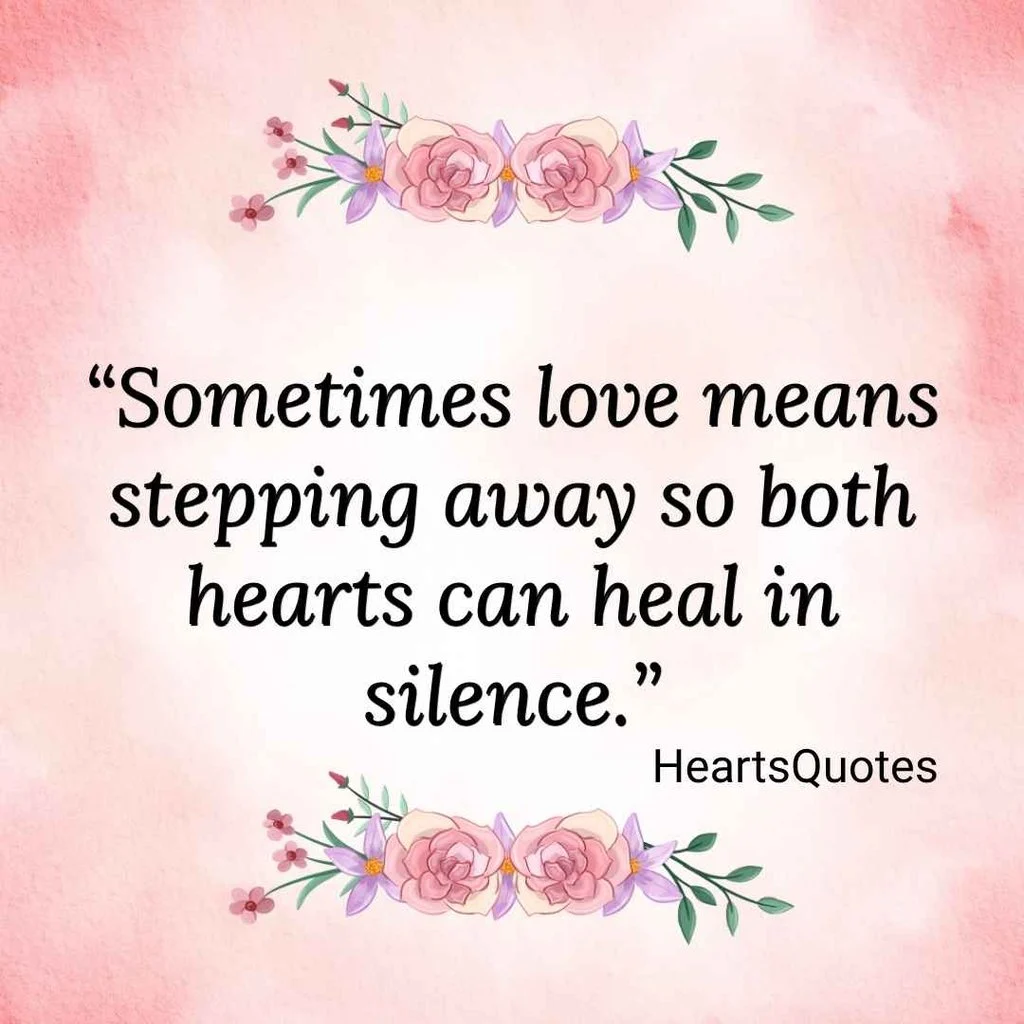
- “Sometimes love means stepping away so both hearts can heal in silence.”
Letting go is often the first act of self-respect after emotional exhaustion.
It reflects psychological acceptance where attachment slowly transforms into peace.
: - “You don’t stop loving them, you start loving yourself more.”
This shows the shift from external dependency to internal emotional strength.
Self-worth becomes the anchor when attachment begins to loosen.
: - “The hardest goodbye is the one you never planned to say.”
Unexpected endings create emotional shock and delayed grief processing.
The mind struggles to accept what the heart did not prepare for.
: - “Letting go hurts because the love was real, not because it was wrong.”
Pain validates emotional authenticity rather than failure in love itself.
Psychologically, this is grief mixed with meaningful attachment memory.
: - “You release them not because you stopped caring, but because you finally care for yourself.”
Self-preservation becomes stronger than emotional dependency over time.
This reflects emotional maturity and boundary reconstruction.
: - “Some people are meant to stay in your heart, not in your life.”
Memory retention replaces physical presence in healthy emotional closure.
This is a cognitive reframing of loss into lasting affection.
: - “You cannot heal in the same place that broke you.”
Environment plays a crucial role in emotional recovery and trauma cycles.
Distance creates psychological space for rebuilding identity.
: - “Letting go is not weakness; it is emotional courage in action.”
Strength is redefined as the ability to release what hurts you.
This challenges traditional beliefs about attachment and endurance.
: - “Love sometimes means knowing when to stop holding on.”
Boundaries become an essential part of emotional intelligence.
Attachment theory explains this as secure disengagement.
: - “You will find peace the moment you stop chasing what is already gone.”
Acceptance reduces cognitive dissonance and emotional resistance.
Healing begins when mental repetition of loss is reduced.
:
Healing Through Pain and Emotional Growth
- “Pain is the language your heart uses when it is learning to let go.”
Emotional suffering signals transformation rather than permanent damage.
It reflects the brain’s adaptation to emotional separation.
: - “Every tear you cry is a step away from emotional bondage.”
Crying functions as psychological release and nervous system regulation.
It helps reduce internal emotional pressure over time.
: - “Healing begins when you stop asking why and start accepting what is.”
Acceptance reduces rumination and obsessive thought loops.
This marks a shift from confusion to clarity.
: - “Your heart breaks so your soul can rebuild stronger walls.”
Emotional pain often strengthens future relationship boundaries.
This is resilience development through lived experience.
: - “Time does not erase love, it softens its grip.”
Memory remains but emotional intensity gradually decreases.
This is neuro-emotional desensitization over time.
: - “You grow when you stop returning to what keeps hurting you.”
Behavioral change is key to emotional recovery.
It represents breaking repetitive attachment cycles.
: - “Sometimes healing looks like walking away without closure.”
Closure is not always external; it is often internal acceptance.
Psychological closure can exist without explanation.
: - “The heart heals in silence, not in explanation.”
Overthinking prolongs emotional attachment and delays recovery.
Silence helps regulate emotional overstimulation.
: - “What breaks you also teaches you how to rebuild yourself.”
Adversity contributes to emotional intelligence and self-awareness.
This reflects post-traumatic growth psychology.
: - “Letting go is the medicine for emotional pain that won’t leave.”
Release reduces chronic emotional attachment patterns.
It is a form of psychological detoxification.
:
Self-Love After Heartbreak and Emotional Rebirth
- “When they leave, you finally meet yourself again.”
Loss redirects attention from external love to internal identity.
This is rediscovery of self after emotional dependency.
: - “Self-love begins where attachment ends.”
Emotional independence grows when dependency dissolves.
It marks a shift in attachment orientation.
: - “You are not incomplete just because someone left.”
Self-worth is independent of relational status.
This counters cognitive distortion of abandonment.
: - “The best relationship you will ever have is with yourself.”
Internal validation replaces external emotional reliance.
This builds long-term emotional stability.
: - “Healing is choosing yourself over memories that hurt.”
Decision-making plays a key role in emotional recovery.
It strengthens psychological boundaries and self-respect.
: - “You don’t lose love; you redirect it inward.”
Emotional energy is rechanneled into self-growth.
This supports emotional reinvestment theory.
: - “Your worth was never tied to someone else staying.”
Identity separation from relationships is crucial for healing.
This reduces emotional dependency patterns.
: - “Loving yourself is the final goodbye to emotional pain.”
Self-compassion acts as a natural healing mechanism.
It reduces internal conflict and regret cycles.
: - “You bloom again when you stop waiting for them to return.”
Hope without reality prolongs emotional stagnation.
Acceptance restores personal growth momentum.
: - “Your heart becomes free when you stop begging for love.”
Emotional freedom begins with dignity and self-respect.
This is liberation from attachment anxiety.
:
Acceptance, Closure, and Moving Forward
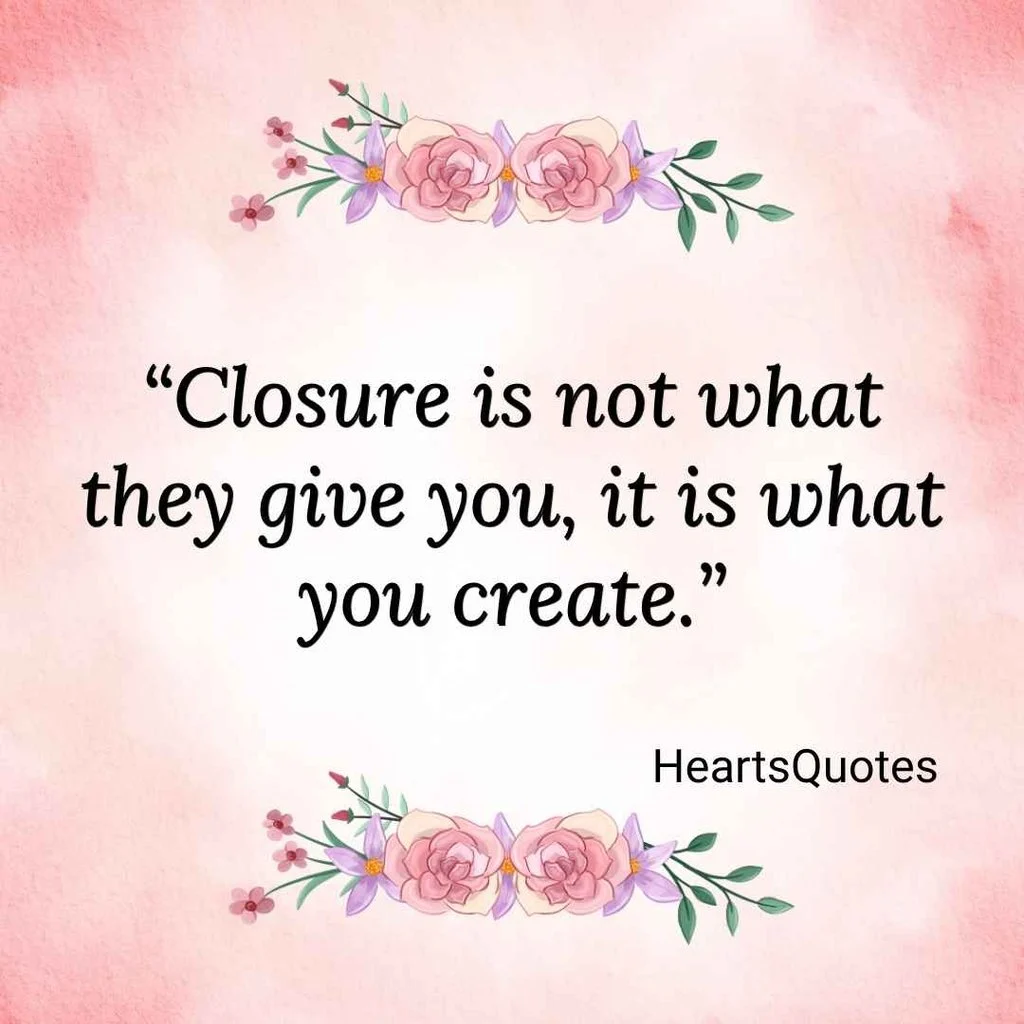
- “Closure is not what they give you, it is what you create.”
Psychological closure is an internal cognitive process.
It does not depend on external validation.
: - “Moving on is choosing peace over emotional chaos.”
Decision-making is central to emotional regulation.
It reflects prioritization of mental stability.
: - “You stop missing them when you start valuing yourself.”
Self-worth reduces dependency on external attachment.
This shifts emotional focus inward.
: - “Not every story is meant to have a perfect ending.”
Acceptance of imperfection reduces emotional resistance.
This supports cognitive flexibility.
: - “The past holds memories, not your future.”
Future orientation is key to emotional healing.
It breaks repetitive nostalgia cycles.
: - “You heal faster when you stop reopening old wounds.”
Re-exposure prolongs emotional recovery timelines.
Avoidance of triggers supports healing.
: - “Letting go is learning to live without emotional anchors.”
Independence replaces emotional dependency structures.
This builds resilience and adaptability.
: - “Some goodbyes are silent but deeply necessary.”
Silence often reflects emotional maturity in separation.
It avoids unnecessary emotional conflict.
: - “You cannot step into healing while holding onto pain.”
Dual emotional states slow down recovery.
Letting go creates space for growth.
: - “Forward is the only direction where healing exists.”
Progress orientation reduces emotional stagnation.
It reinforces adaptive coping strategies.
:
Inner Strength and Emotional Freedom
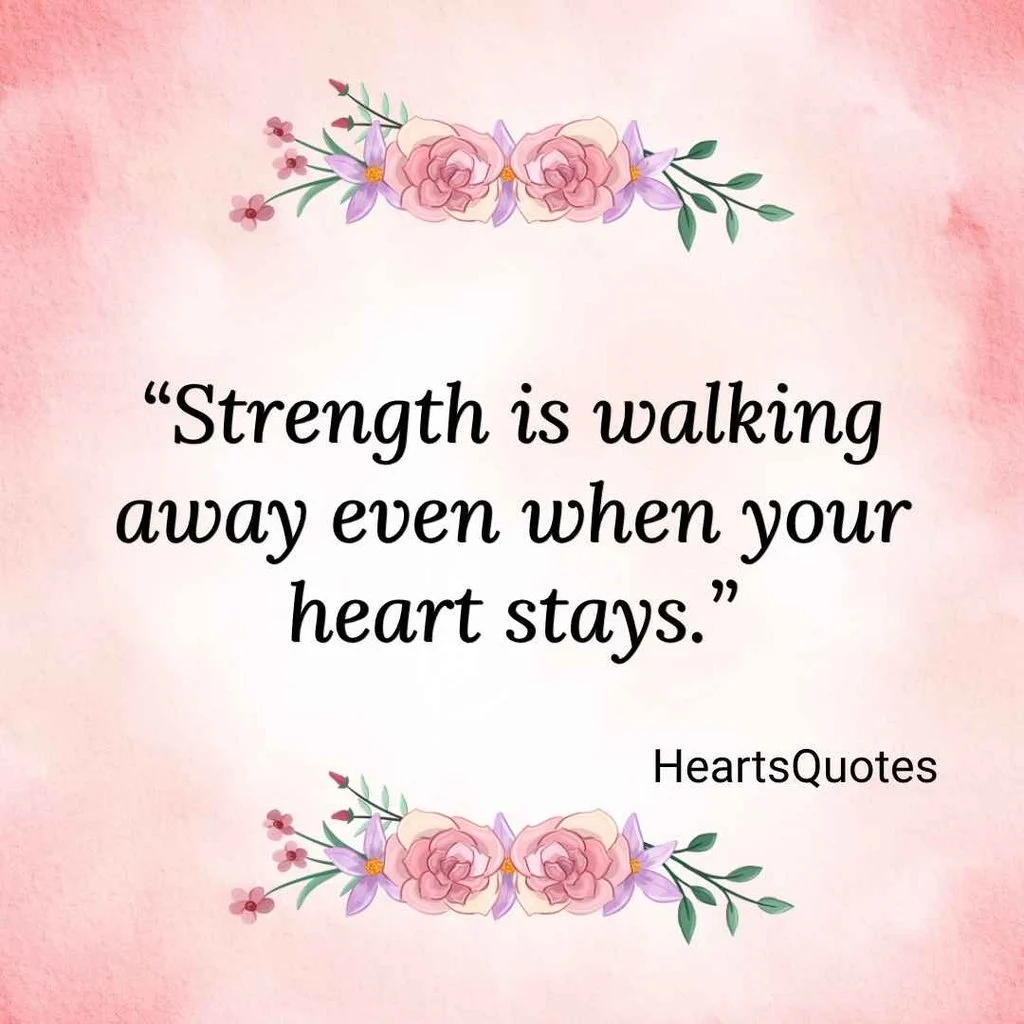
- “Strength is walking away even when your heart stays.”
Emotional discipline overrides attachment impulses.
This reflects higher cognitive control.
: - “Freedom begins when attachment no longer controls you.”
Psychological independence reduces emotional dependency.
It restores internal equilibrium.
: - “You are stronger than what you lost.”
Self-efficacy grows through emotional adversity.
This reinforces resilience identity.
: - “Letting go is choosing peace over emotional captivity.”
Freedom replaces psychological entrapment.
This is emotional liberation.
: - “Your heart learns strength through heartbreak.”
Pain becomes a catalyst for emotional maturity.
This reflects growth through adversity.
: - “Not every love is meant to be held forever.”
Temporal acceptance reduces emotional rigidity.
It supports realistic emotional expectations.
: - “You rise when you stop clinging to what falls away.”
Adaptation is key to emotional survival.
This reflects acceptance-based coping.
: - “Emotional freedom is loving without holding on.”
Non-attachment defines mature emotional bonding.
This aligns with healthy relational psychology.
: - “You heal when your memories no longer control you.”
Memory loses emotional charge over time.
This is cognitive emotional detachment.
: - “Letting go is how the heart learns to breathe again.”
Emotional release restores psychological balance.
It symbolizes renewal and inner calm.
:
Frequently Asked Questions
Why is letting go of someone you love so painful?
It is painful because emotional attachment creates deep neural and psychological bonds that take time to break.
How long does it take to emotionally let someone go?
Healing time varies, but emotional detachment usually improves gradually with acceptance and self-focus.
Can you still love someone after letting them go?
Yes, love can remain as a memory even after emotional and physical separation.
What is the best way to move on from someone you love?
The best way is to focus on self-healing, acceptance, and rebuilding your personal life.
Conclusion
Letting go is not the end of love but the beginning of self-discovery and emotional healing.
It teaches you that not every connection is meant to last forever in physical form.
Your heart may feel broken today, but it is slowly learning how to breathe again.
Every step away from pain is a step toward emotional freedom and self-respect.
In time, you will realize that letting go was not loss, but transformation.

Hello, I’m Lionel Messi, and I believe that great words have the power to inspire people just like great moments on the field. Throughout my journey, I have learned that dedication, hard work, and believing in yourself can help turn dreams into reality.
I love sharing motivational thoughts, life lessons, and inspiring quotes that encourage people to keep moving forward. My experiences in football have taught me the importance of teamwork, patience, humility, and never giving up.
Through my writing, I aim to inspire readers to follow their passions and overcome challenges with confidence.
I am the author of My Life, My Dream and The Power of Belief, two books that share inspiring lessons about determination, success, and achieving goals.
 Ethan Whitmore
 Amelia Hartwell