Sometimes, I love with everything I have, even when love feels complicated, painful, or hard to explain.
If you’ve ever loved someone so deeply that your heart kept choosing them through every doubt, distance, and difficult moment, you already know what it means to love hard.
These quotes are for you—the person who feels deeply, stays loyal, and believes that real love is worth fighting for. I hope you find a few words here that say exactly what your heart has been trying to say.
Love Hard in Pain & Growth
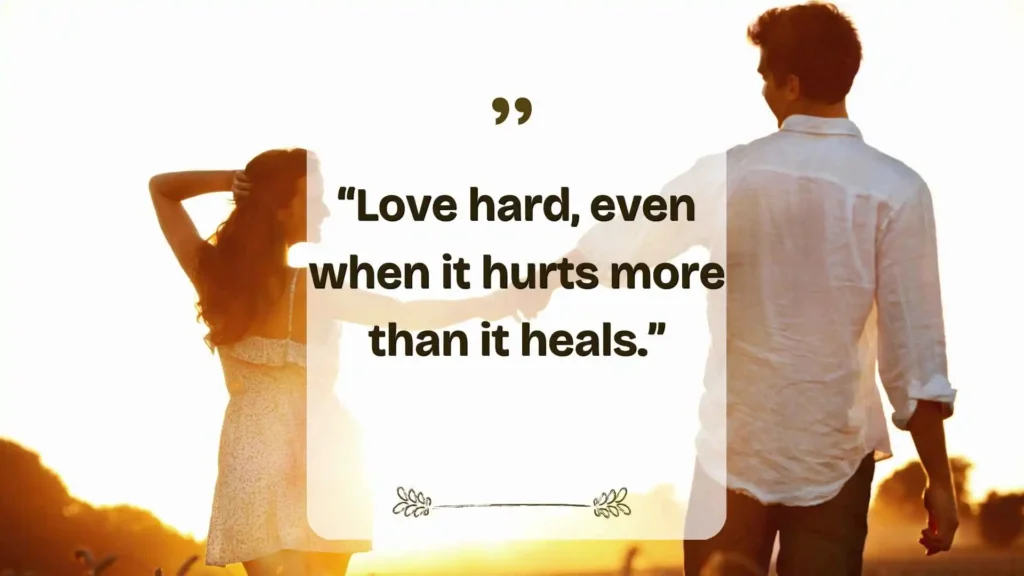
- “Love hard, even when it hurts more than it heals.”
Explanation
Pain is often the price of emotional depth and real connection.
Psychologically, intense love activates both attachment and vulnerability systems.
: - “The hardest love creates the strongest version of you.”
Explanation
Growth often emerges from emotional discomfort and heartbreak.
Your brain rebuilds resilience after emotional stress experiences.
: - “Loving deeply means breaking deeply, too.”
Explanation
Depth of emotion increases sensitivity to emotional loss.
Neuroscience shows strong attachment intensifies emotional pain.
: - “You don’t survive love—you evolve through it.”
Explanation
Love is a transformation process, not just an experience.
Identity shifts occur through repeated emotional bonding cycles.
: - “Hard love teaches lessons soft love never will.”
Explanation
Struggle-based experiences build long-term emotional intelligence.
The mind retains lessons from emotional intensity more strongly.
: - “Even broken hearts learn how to love harder again.”
Explanation
Healing rewires emotional circuits toward renewed attachment.
Resilience forms through repeated emotional recovery patterns.
: - “The deeper the love, the louder the growth.”
Explanation
Strong emotions amplify personal development signals in the brain.
Emotional intensity often correlates with psychological transformation.
: - “Pain in love is proof you felt it fully.”
Explanation
Emotional pain reflects authentic psychological investment.
Avoidance reduces pain but also limits emotional depth.
: - “Love hard enough, and even pain becomes meaningful.”
Explanation
Meaning-making transforms suffering into emotional insight.
Cognitive reframing helps convert pain into growth narratives.
: - “You grow where your heart breaks open.”
Explanation
Emotional rupture creates space for psychological expansion.
Breakdowns often precede breakthroughs in emotional development.
:
Loyalty & Devotion
- “Love hard, stay loyal even when it’s difficult.”
Explanation
Consistency strengthens attachment security in relationships.
Loyalty builds trust-based emotional stability over time.
: - “Devotion is loving someone without conditions.”
Explanation
Unconditional regard supports deep emotional bonding.
Psychological safety increases relational commitment levels.
: - “Hard love doesn’t walk away—it stands still.”
Explanation
Emotional endurance reflects attachment commitment systems.
Stable love reduces fear-based relational responses.
: - “Loyal hearts love beyond logic.”
Explanation
Emotional systems often override cognitive reasoning in attachment.
Deep bonds are driven by affective rather than rational processing.
: - “True devotion survives distance and silence.”
Explanation
Attachment bonds persist despite physical separation.
Memory-based love sustains emotional connection over time.
: - “Love hard, even when nobody is watching.”
Explanation
Authentic love is driven by internal values, not validation.
Integrity strengthens emotional identity structures.
: - “Loyalty is love that refuses to fade.”
Explanation
Stable attachment patterns resist emotional decay.
Consistency reinforces long-term relationship satisfaction.
: - “Devotion is choosing the same heart every day.”
Explanation
Repetitive choice strengthens emotional bonding pathways.
Love becomes a conscious daily psychological commitment.
: - “Hard love stays when everything else leaves.”
Explanation
Resilient attachment survives environmental emotional stressors.
Secure bonds persist through instability and uncertainty.
: - “Loyalty is the quiet strength of love.”
Explanation
Stable emotions are often less visible but deeply powerful.
Consistency forms the backbone of secure relationships.
:
Heartbreak & Healing
- “Love hard, even if it ends in goodbye.”
Explanation
Emotional openness increases vulnerability to loss.
Goodbyes often mark the beginning of healing cycles.
: - “Broken hearts still beat with love inside them.”
Explanation
Attachment memory remains active after separation.
Neural pathways preserve emotional imprint of love.
: - “Healing begins where love once hurt.”
Explanation
Emotional wounds initiate psychological recovery processes.
Pain becomes the trigger for emotional reconstruction.
: - “You can love hard and still let go.”
Explanation
Attachment and release can coexist in emotional growth.
Letting go is part of healthy psychological regulation.
: - “Heartbreak is love learning how to leave.”
Explanation
Emotional endings are adaptive attachment recalibrations.
The brain reorganizes after relational loss experiences.
: - “Even shattered love teaches something whole.”
Explanation
Fragmented emotions still create meaningful insight.
Cognitive reflection restores psychological wholeness.
: - “Loving deeply makes letting go harder.”
Explanation
Stronger bonds increase emotional separation difficulty.
Attachment intensity predicts grief response duration.
: - “Hard love leaves marks, not just memories.”
Explanation
Emotional experiences imprint both memory and identity.
Psychological traces influence future relationship behavior.
: - “Painful endings still prove real beginnings.”
Explanation
Closure creates space for new emotional cycles.
Endings often activate renewal processes in the mind.
: - “You don’t forget love—you grow around it.”
Explanation
Memory integration allows emotional adaptation over time.
Identity expands rather than erases past attachments.
:
Passion & Intensity
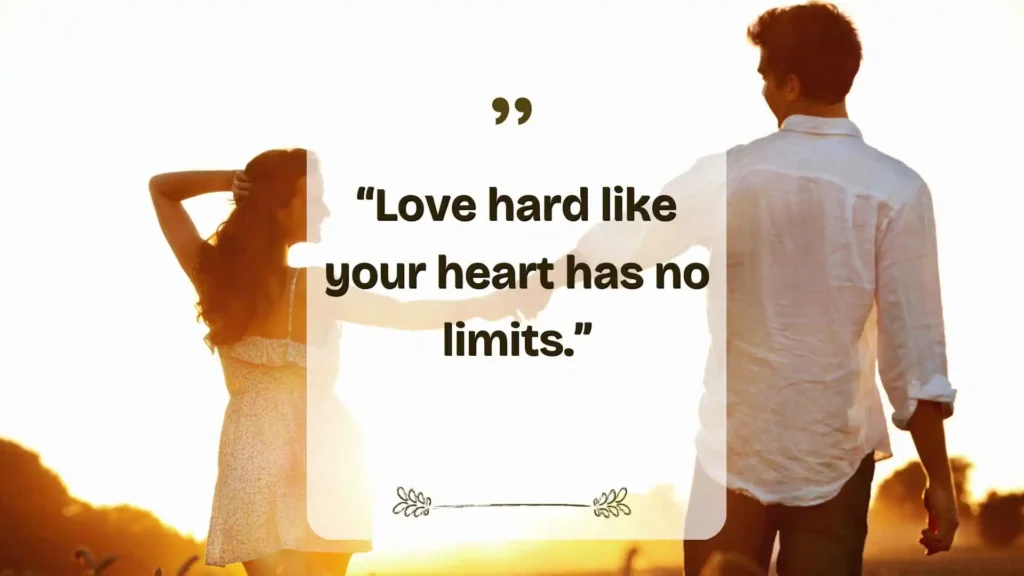
- “Love hard like your heart has no limits.”
Explanation
Emotional intensity amplifies dopamine-driven bonding responses.
Passion increases psychological engagement in relationships.
: - “Intense love burns, but it also lights you up.”
Explanation
Strong emotions activate both pleasure and stress systems.
Arousal enhances emotional memory encoding processes.
: - “When you love hard, everything feels louder.”
Explanation
Emotional amplification heightens sensory perception.
The brain prioritizes emotionally significant stimuli.
: - “Passion is love refusing to stay quiet.”
Explanation
Strong attachment expresses itself through emotional intensity.
Affective systems override emotional restraint mechanisms.
: - “Hard love doesn’t whisper—it roars.”
Explanation
High emotional activation increases expressive behavior.
Intensity reflects deep psychological investment.
: - “You feel everything more when you love deeply.”
Explanation
Emotional sensitivity increases with attachment depth.
Neural empathy circuits become more active in love.
: - “Love hard, even if it consumes you a little.”
Explanation
Intense bonds can temporarily overwhelm emotional balance.
Attachment can dominate cognitive emotional regulation.
: - “Passionate love is both chaos and comfort.”
Explanation
Emotional duality exists in strong romantic bonds.
The brain processes love as both threat and safety.
: - “Hard love turns feelings into storms.”
Explanation
Emotional escalation leads to heightened psychological states.
Strong affect often feels overwhelming and immersive.
: - “Intensity is the language of deep love.”
Explanation
Strong emotions signal attachment depth and meaning.
Psychological intensity reflects relational significance.
:
Self-love & Resilience

- “Love hard, but never forget yourself.”
Explanation
Self-identity protects emotional boundaries in relationships.
Balanced attachment prevents emotional dependency cycles.
: - “Your heart deserves the love it gives.”
Explanation
Reciprocal emotional investment supports mental well-being.
Self-worth regulates relationship expectations.
: - “Hard love begins with loving yourself first.”
Explanation
Self-attachment forms foundation for external relationships.
Psychological health starts with internal validation.
: - “You are worthy of the love you chase.”
Explanation
Self-esteem influences relational choices and patterns.
Worthiness beliefs shape emotional expectations.
: - “Resilience is loving again after pain.”
Explanation
Emotional recovery builds psychological strength over time.
Adaptive coping supports future relationship stability.
: - “Even strong hearts need soft healing.”
Explanation
Recovery requires emotional gentleness and care.
Healing processes restore emotional regulation capacity.
: - “Love hard, but heal harder.”
Explanation
Recovery intensity determines emotional resilience outcomes.
Healing strengthens future attachment security.
: - “Your love is powerful, don’t waste it.”
Explanation
Emotional energy is a valuable psychological resource.
Directed love improves relational satisfaction.
: - “Self-love turns pain into power.”
Explanation
Reframing transforms emotional suffering into growth energy.
Psychological resilience emerges from self-compassion practices.
: - “A healed heart loves more wisely.”
Explanation
Healing improves emotional decision-making ability.
Experience refines attachment patterns over time.
:
Frequently Asked Questions
What does “love hard” mean emotionally?
It means loving with full emotional depth, intensity, and vulnerability.
Is loving hard healthy in relationships?
Yes, when balanced with self-respect and emotional boundaries.
Why does loving hard sometimes hurt so much?
Because deep attachment increases emotional sensitivity and loss impact.
Can someone learn to love hard without getting hurt?
You can reduce pain through awareness, but vulnerability is always part of love.
Conclusion
Loving hard is not about losing control it’s about feeling life more deeply than most people dare to.
It shapes your growth, your healing, and even your identity in ways you don’t always notice at first.
Every heartbreak, every devotion, every moment of intensity becomes part of your emotional story.
You may get broken, but you also get rebuilt stronger and more aware.
In the end, love hard quotes remind you that depth is never wasted it always transforms you.

Hi, I’m Amelia Hartwell, and I believe every meaningful quote has a story, a lesson, and a feeling behind it. My passion is turning powerful words into inspiring content that helps readers discover hope, confidence, and motivation.
I enjoy exploring famous sayings, life quotes, and positive affirmations that connect with people from different backgrounds. My goal is to share timeless wisdom that encourages kindness, courage, and personal growth.
I am the author of Letters of Inspiration and The Beauty of Simple Words, two books dedicated to celebrating the power of thoughts and expressions that inspire generations.
 Ethan Whitmore
 lio massi