Unrequited love can feel like holding a beautiful dream that only you can see. I know how deeply it can hurt when your heart chooses someone who doesn’t feel the same way. You may smile and carry on, but inside, those unspoken feelings can stay with you.
Sometimes, I think the hardest part isn’t loving someone—it’s knowing that your love may never be returned. You give your heart, replay every little moment, and quietly hope for something that may never happen. If you’ve ever loved someone from a distance, You already know how painful it can be to care so deeply and still feel unseen.
These unrequited love quotes put those complicated feelings into words. I hope you find a line that speaks to your heart, helps You express what you couldn’t say, or simply reminds you that even unreturned love can leave behind something meaningful.
Pain of One-Sided Love
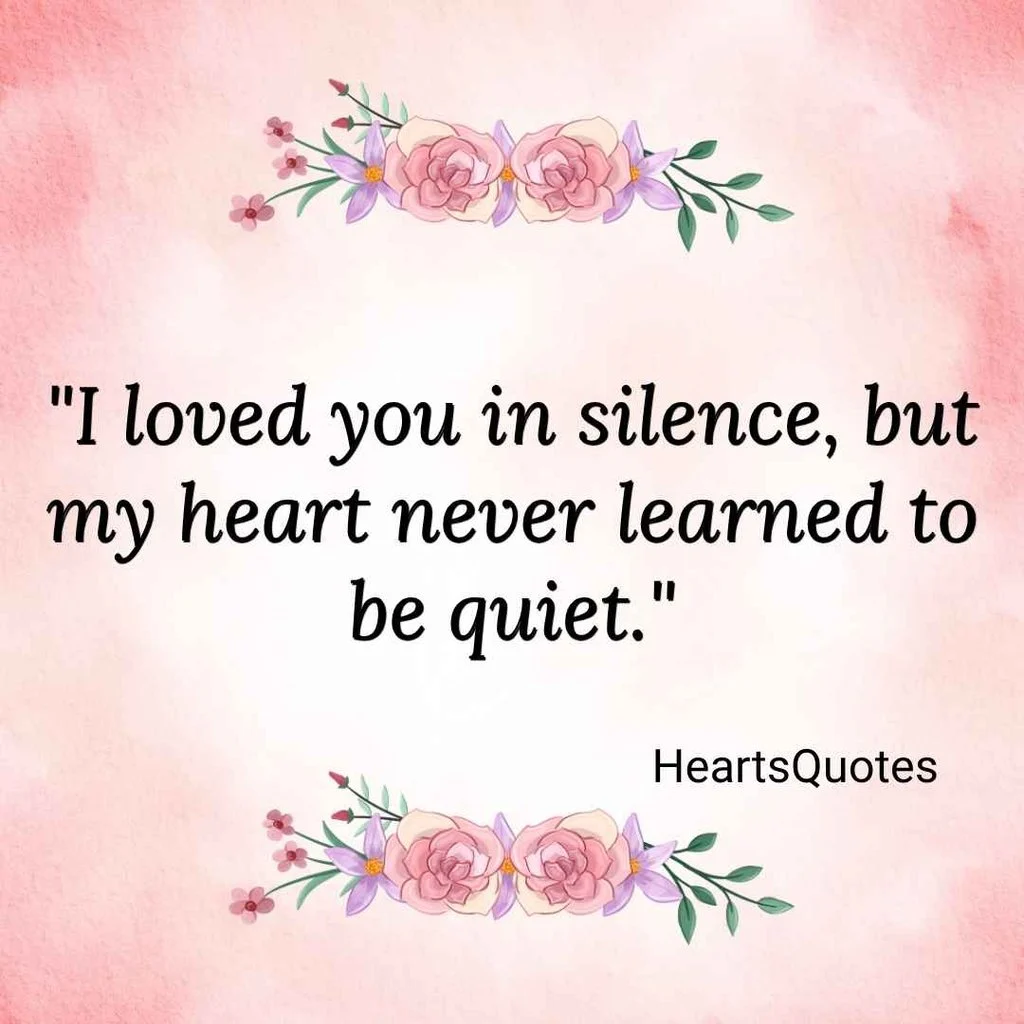
- “I loved you in silence, but my heart never learned to be quiet.”
The quote reflects suppressed emotional expression and inner conflict.
Psychologically, it shows how unspoken love intensifies emotional burden.
: - “You were my everything, but I was just an option in your story.”
This highlights imbalance in emotional investment and attachment styles.
It reflects rejection sensitivity and self-worth distortion in relationships.
: - “Loving you alone felt like carrying a heart made of glass.”
It symbolizes emotional fragility and constant fear of breaking down.
Shows how unreciprocated affection increases vulnerability and anxiety.
: - “My love reached you, but your silence answered everything.”
Represents emotional closure through absence rather than communication.
Reflects cognitive dissonance in one-sided emotional attachment.
: - “I stayed, even when your heart had already left.”
Shows persistence despite emotional abandonment and denial.
Psychologically linked to attachment trauma and hope bias.
: - “You never looked at me the way I looked at you.”
Highlights asymmetry in emotional perception and validation.
Reveals longing for mutual recognition in relationships.
: - “Every heartbeat whispered your name, even when you didn’t hear mine.”
Represents obsessive emotional thinking and romantic fixation.
Shows how memory reinforcement strengthens emotional attachment.
: - “I was in love, but you were never in the same story.”
Indicates misaligned emotional narratives between two people.
Reflects unmet expectations and idealized love projection.
: - “You taught me how love can hurt without even touching.”
Symbolizes emotional pain without physical interaction.
Shows psychological impact of emotional rejection.
: - “I gave you my heart; you gave me silence in return.”
Represents emotional imbalance and lack of reciprocity.
Highlights vulnerability and emotional invalidation.
:
Silent Longing & Missing
- “I miss you in ways I cannot explain to anyone.”
Represents internalized grief and emotional isolation.
Shows difficulty in verbalizing deep emotional attachment.
: - “Your absence speaks louder than your presence ever did.”
Highlights emotional impact of emotional withdrawal.
Reflects how absence strengthens attachment memory.
: - “I search for you in every quiet moment of my day.”
Represents intrusive thoughts and emotional dependency.
Shows cognitive repetition in longing behavior.
: - “Missing you feels like breathing without air.”
Indicates emotional dependency and psychological withdrawal.
Reflects intensity of attachment-driven distress.
: - “Even silence reminds me of everything you are not here for.”
Symbolizes emotional triggers linked to memory association.
Shows how the environment reinforces longing patterns.
: - “I keep your memory alive, even when reality says goodbye.”
Represents resistance to emotional acceptance and closure.
Reflects denial stage in grief psychology.
: - “My heart still waits for a reply that will never come.”
Shows hope persistence despite reality awareness.
Linked to delayed emotional acceptance.
: - “Every place I go still feels like your shadow is there.”
Represents emotional imprinting and associative memory.
Shows spatial emotional triggers in heartbreak.
: - “I miss you more in silence than in words.”
Highlights deeper emotional processing during quiet moments.
Reflects introspective rumination patterns.
: - “You became a memory I cannot stop revisiting.”
Indicates repetitive cognitive looping in emotional grief.
Shows difficulty in emotional detachment.
:
Rejection & Emotional Distance
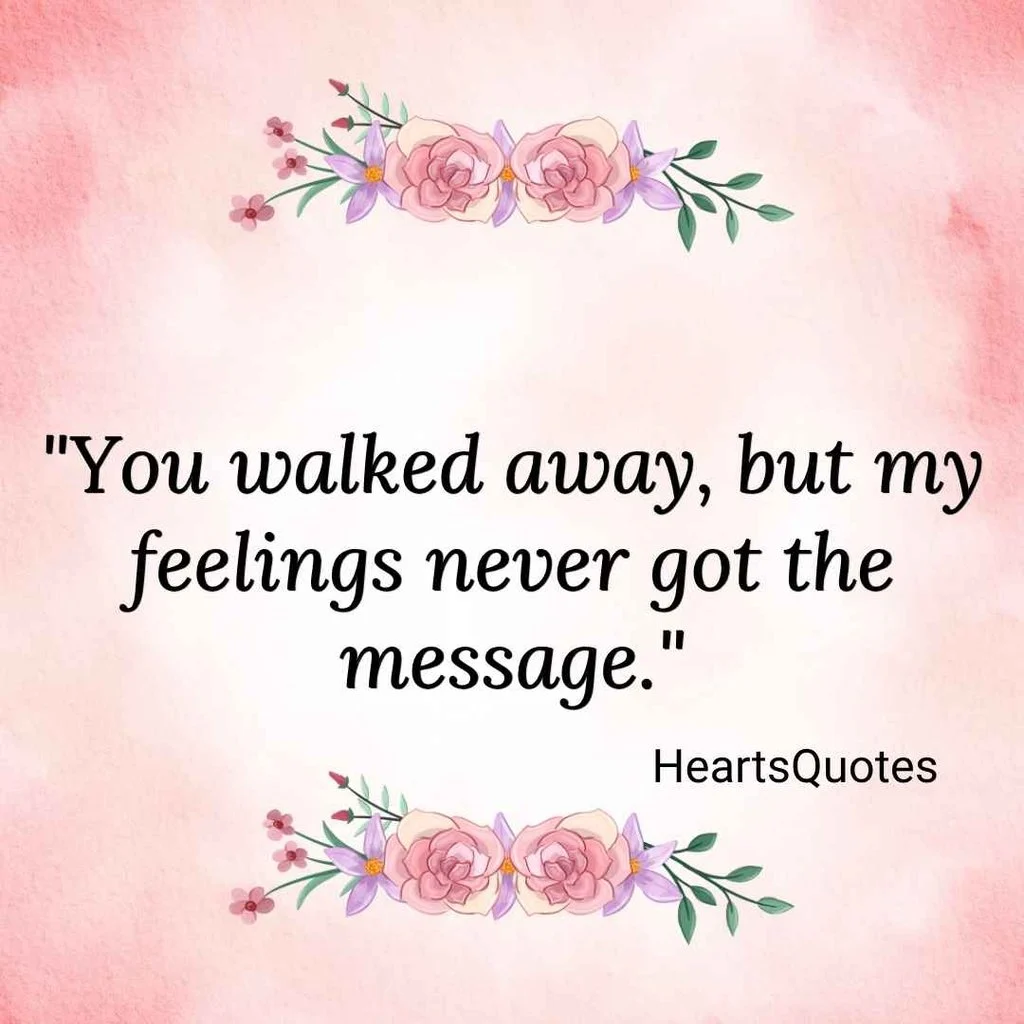
- “You walked away, but my feelings never got the message.”
Represents delayed emotional acceptance of rejection.
Shows cognitive-emotional mismatch in heartbreak.
: - “Your distance turned my love into unanswered questions.”
Indicates uncertainty and unresolved emotional processing.
Reflects anxiety from lack of closure.
: - “I was close enough to hope, but far from being chosen.”
Highlights partial emotional connection and rejection pain.
Shows self-esteem impact of exclusion.
: - “You didn’t reject me loudly; you did it quietly.”
Represents subtle emotional exclusion and passive rejection.
Reflects emotional ambiguity in relationships.
: - “I kept waiting where you had already left emotionally.”
Shows asymmetry in emotional timelines.
Linked to attachment lag in relationships.
: - “Your silence built walls I kept trying to break.”
Represents effort-rejection imbalance in love.
Shows emotional exhaustion from persistence.
: - “I was present, but never truly seen.”
Indicates invisibility in emotional connection.
Reflects unmet validation needs.
: - “You gave me attention, but never affection.”
Highlights difference between interaction and emotional intimacy.
Shows partial reinforcement psychology.
: - “Rejection didn’t break me; hoping did.”
Represents prolonged emotional anticipation effects.
Reflects impact of sustained uncertainty.
: - “I learned your absence faster than your presence.”
Indicates emotional learning through loss rather than connection.
Shows adaptive memory shift in heartbreak.
:
Hope & Letting Go
- “I still hoped, even when hope had no reason left.”
Represents irrational persistence in emotional attachment.
Shows cognitive bias toward optimism.
: - “Letting go of you was harder than loving you.”
Indicates withdrawal difficulty from emotional bonds.
Reflects grief processing challenges.
: - “I kept believing in a story you never wrote with me.”
Represents imagined relational narratives and fantasy bonding.
Shows cognitive distortion in love.
: - “Hope is what hurt me more than love ever did.”
Indicates emotional dependency on expectation.
Reflects anticipation-driven suffering.
: - “I finally understood that love cannot be forced.”
Represents acceptance and emotional maturity.
Shows cognitive reframing in healing.
: - “I waited for you, until I started waiting for myself.”
Indicates shift from external to self-focus.
Reflects self-recovery psychology.
: - “Sometimes letting go is the last act of love.”
Represents healthy emotional release and closure.
Shows adaptive coping mechanisms.
: - “I stopped chasing you and started finding myself.”
Indicates identity reconstruction after heartbreak.
Reflects self-growth process.
: - “Hope faded, but peace slowly began to grow.”
Represents emotional transition from longing to acceptance.
Shows healing trajectory.
: - “I loved you enough to finally walk away.”
Indicates boundary formation and emotional strength.
Reflects resilience in attachment loss.
:
Healing & Self-Worth
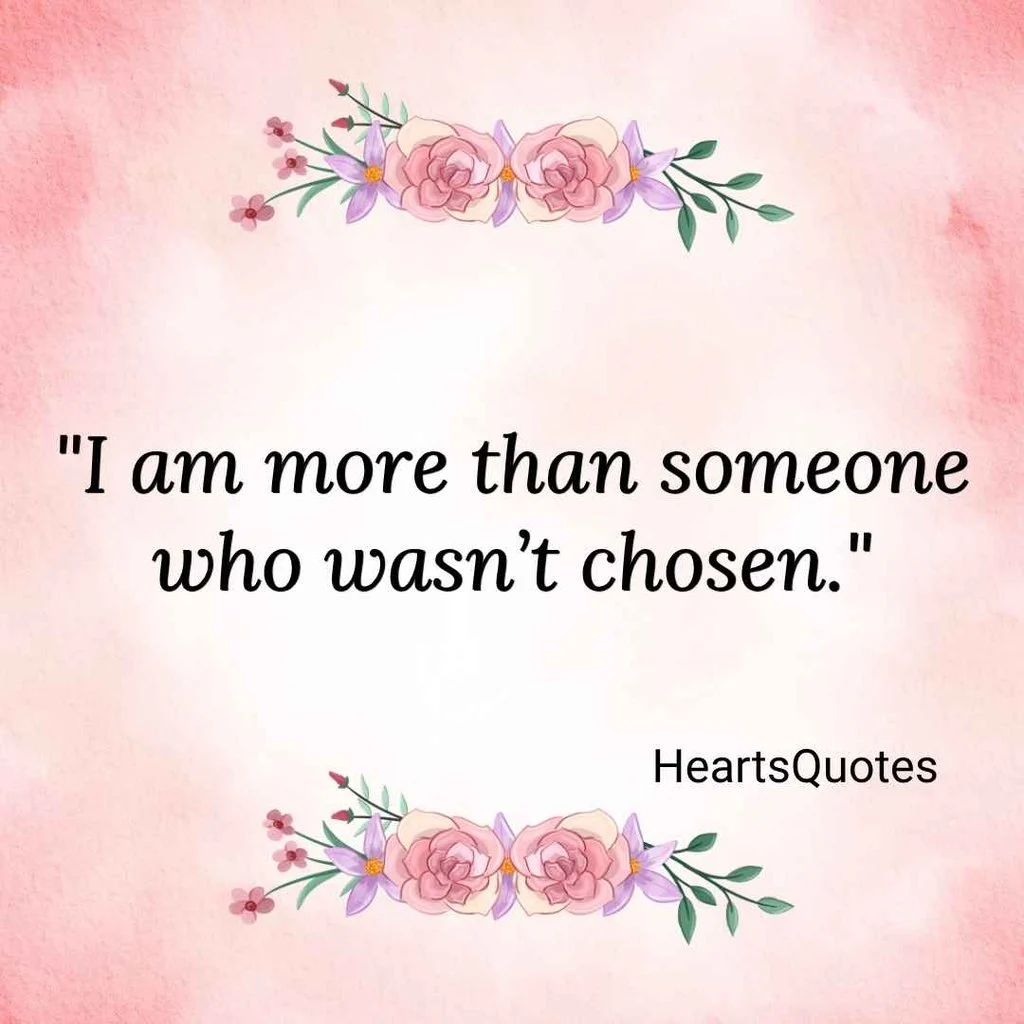
- “I am more than someone who wasn’t chosen.”
Represents self-worth reconstruction after rejection.
Shows identity restoration psychology.
: - “My heart still heals from what my mind already knows.”
Indicates emotional-cognitive conflict in recovery.
Reflects delayed emotional processing.
: - “I stopped measuring my worth through your eyes.”
Represents independence from external validation.
Shows self-esteem rebuilding.
: - “Healing began when I chose myself over your memory.”
Indicates prioritization of self-care in recovery.
Reflects emotional reconditioning.
: - “I am learning that love should never hurt this much.”
Represents redefinition of healthy relationships.
Shows cognitive restructuring.
: - “My silence now protects the peace I fought for.”
Indicates emotional boundary establishment.
Reflects self-regulation improvement.
: - “I am no longer waiting for someone who never arrived.”
Represents closure and acceptance.
Shows release from emotional dependency.
: - “Self-love became louder than my heartbreak.”
Indicates emotional transformation and resilience.
Reflects empowerment psychology.
: - “I healed not by forgetting you, but by remembering myself.”
Represents integration of past without attachment.
Shows advanced emotional recovery.
: - “What broke me once is now building me again.”
Indicates post-traumatic growth.
Reflects resilience and identity rebuilding.
:
Frequently Asked Questions
What is unrequited love?
Unrequited love is a one-sided emotional attachment where feelings are not returned by the other person.
Why does unrequited love hurt so much?
It hurts because the brain craves emotional validation that never arrives, creating psychological tension.
How do I stop thinking about someone who doesn’t love me back?
You gradually reduce emotional attachment by focusing on self-worth and creating distance from triggers.
Can unrequited love turn into real love later?
Sometimes it can, but in most cases emotional imbalance makes mutual love unlikely to develop.
Conclusion
Unrequited love teaches the deepest emotional lessons about attachment and self-worth.
It shows how powerful feelings can exist without being returned in the same way.
Pain becomes a teacher, guiding you toward emotional awareness and healing.
Letting go is not loss—it is a step toward rediscovering yourself.
In the end, your heart learns that being loved back is just as important as loving.

Hi, I’m Amelia Hartwell, and I believe every meaningful quote has a story, a lesson, and a feeling behind it. My passion is turning powerful words into inspiring content that helps readers discover hope, confidence, and motivation.
I enjoy exploring famous sayings, life quotes, and positive affirmations that connect with people from different backgrounds. My goal is to share timeless wisdom that encourages kindness, courage, and personal growth.
I am the author of Letters of Inspiration and The Beauty of Simple Words, two books dedicated to celebrating the power of thoughts and expressions that inspire generations.
 Ethan Whitmore
 lio massi