Young love quotes capture the beautiful feeling of loving someone when everything feels new, exciting, and unforgettable. I know how a simple smile, a late-night conversation, or one special person can make your whole world feel different. You may look back on young love and realize it was one of the purest chapters of your heart.
Young love has a special kind of magic—it makes ordinary moments feel unforgettable and simple words feel deeply meaningful. I remember how love can make you dream bigger, smile for no reason, and believe that one person can make every day brighter. If you are experiencing that feeling now, You know how precious it can be, because some young love may fade with time, but the memories it creates can stay in your heart forever.
You may be searching for the right words to describe your first crush, a sweet relationship, or the innocent love that once made your heart race. I hope these young love quotes help you express what you feel, remind you of beautiful memories, and give you words for emotions that are sometimes difficult to say out loud.
First Love & Innocent Feelings
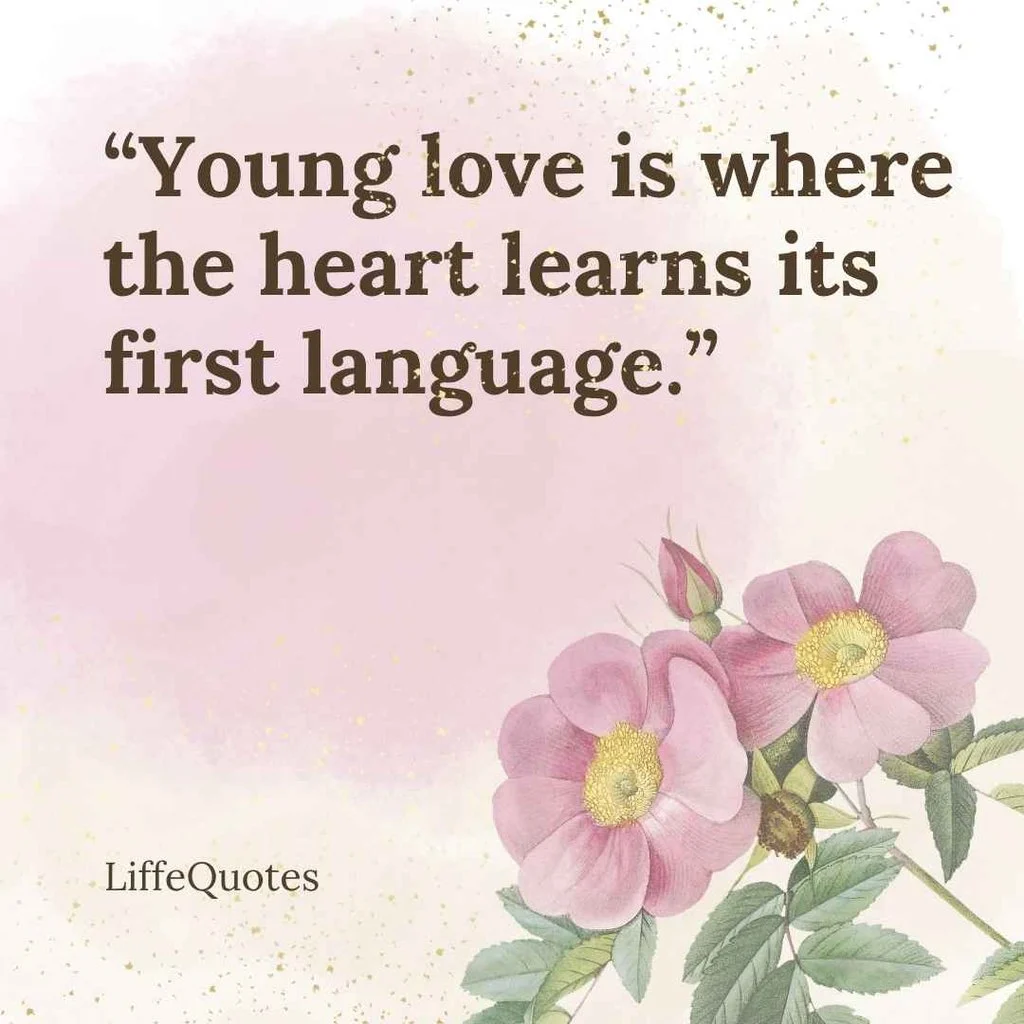
- “Young love is where the heart learns its first language.”
Explanation
It reflects emotional beginnings when feelings are pure and unshaped.
Psychologically, it represents attachment formation in early romantic bonding.
: - “First love feels like a dream you don’t want to wake from.”
Explanation
This captures the idealized perception of early romantic experiences.
It shows dopamine-driven emotional highs common in new relationships.
: - “In young love, even silence feels like poetry.”
Explanation
Silence becomes meaningful due to emotional sensitivity and curiosity.
It highlights how non-verbal connection builds deep emotional awareness.
: - “We didn’t know love, but we knew how it felt.”
Explanation
This shows emotional intuition before cognitive understanding of love.
It reflects instinctive bonding in adolescent psychology.
: - “Young hearts don’t ask questions; they just fall.”
Explanation
It symbolizes impulsive emotional engagement without logical analysis.
This is linked to early-stage romantic idealization.
: - “First love writes itself in memories, not words.”
Explanation
Memory encoding becomes stronger in emotionally intense first experiences.
It shows how emotional events shape long-term recall.
: - “We were too young to define love, but not to feel it.”
Explanation
Emotional intelligence often precedes verbal articulation in youth.
It highlights experiential learning in romantic development.
: - “Young love is innocence wrapped in curiosity.”
Explanation
Curiosity drives exploration of emotional boundaries in relationships.
It reflects psychological openness during formative years.
: - “Our first love was simple, but it felt infinite.”
Explanation
Perceived emotional infinity is common in adolescent bonding.
It demonstrates distorted time perception in intense emotions.
: - “We didn’t fall in love; we grew into it unknowingly.”
Explanation
Love is shown as a gradual emotional development process.
It reflects subconscious bonding and attachment growth.
:
School Romance & Teenage Crushes
- “Hallways became magical when I saw you.”
Explanation
Familiar spaces gain emotional significance through romantic association.
This is linked to contextual emotional memory in adolescence.
: - “My biggest distraction was your smile in class.”
Explanation
Attention bias occurs when emotional stimuli dominate focus.
It reflects dopamine-driven distraction in teenage attraction.
: - “Young love begins with stolen glances between lectures.”
Explanation
Subtle communication forms the base of early romantic curiosity.
It shows how indirect interaction builds anticipation.
: - “We studied less and felt more.”
Explanation
Emotions often override cognitive academic focus in teen romance.
It highlights hormonal influence on attention span.
: - “Your name in my notebook meant more than my notes.”
Explanation
Symbolic attachment develops through repeated emotional association.
It shows personalization of neutral objects in romantic thinking.
: - “Every school bell sounded like your goodbye.”
Explanation
Auditory cues become emotionally conditioned triggers.
It reflects associative learning in adolescent psychology.
: - “Teenage hearts beat louder in crowded classrooms.”
Explanation
Social environments intensify emotional awareness and attraction.
It highlights heightened self-consciousness in youth.
: - “We shared pencils but secretly shared feelings.”
Explanation
Hidden emotional exchange is common in early relationships.
It reflects fear of rejection and emotional vulnerability.
: - “Young love hides in the smallest classroom moments.”
Explanation
Micro-interactions gain exaggerated emotional meaning.
It shows selective attention in romantic development.
: - “Even detention felt better if you were there.”
Explanation
Negative experiences are softened by emotional presence.
It reflects emotional conditioning in early attachment.
:
Long Distance Young Love
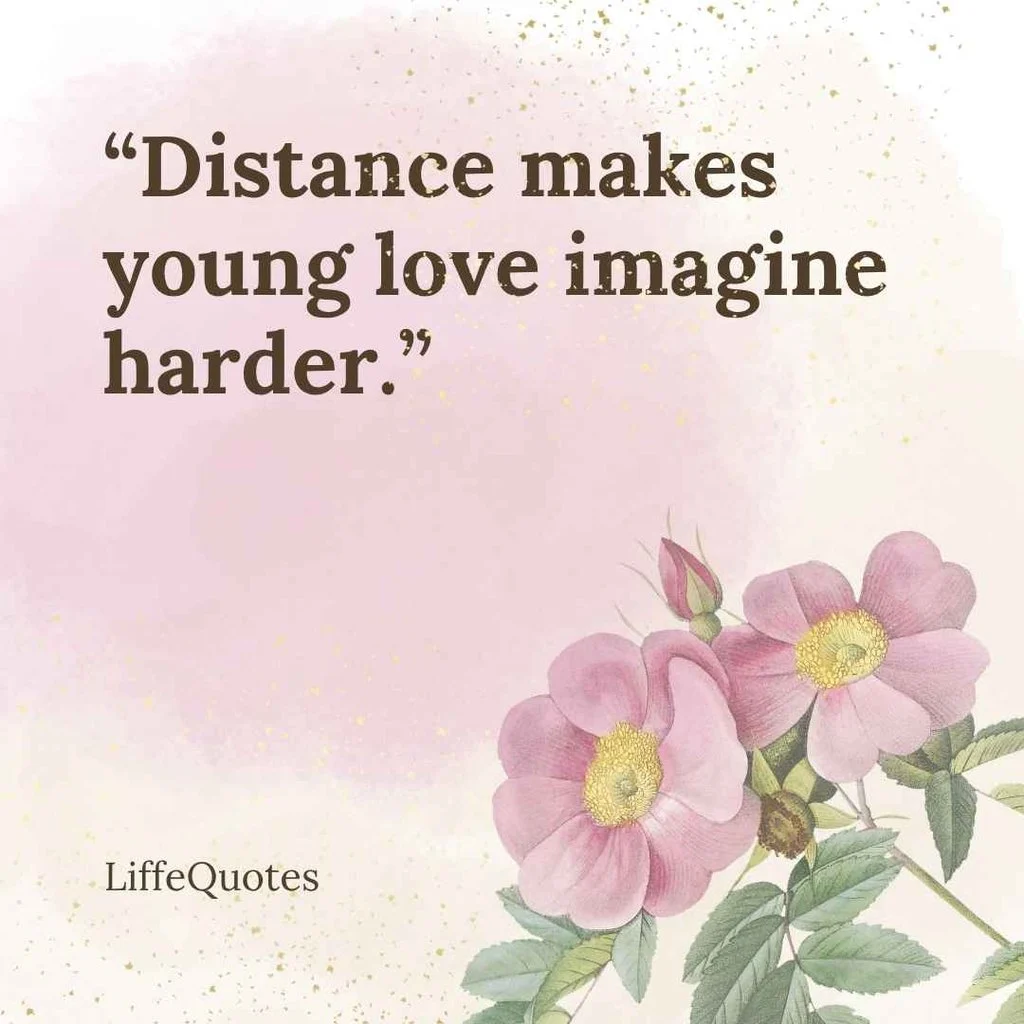
- “Distance makes young love imagine harder.”
Explanation
Imagination compensates for lack of physical presence.
It shows cognitive fantasy in emotional separation.
: - “We were miles apart but emotionally connected.”
Explanation
Emotional bonding can persist despite geographical distance.
It reflects attachment theory in long-distance relationships.
: - “Every message felt like a heartbeat across space.”
Explanation
Digital communication becomes emotionally symbolic.
It highlights modern romantic connection via technology.
: - “Missing you became my daily routine.”
Explanation
Absence reinforces emotional dependency patterns.
It reflects longing as a psychological habit.
: - “Young love survives on hope and signals.”
Explanation
Hope sustains emotional continuity in uncertain relationships.
It shows resilience in adolescent attachment.
: - “Your voice was my favorite distance cure.”
Explanation
Auditory memory provides emotional comfort and stability.
It reflects sensory emotional anchoring.
: - “We loved through screens but felt real.”
Explanation
Virtual communication still creates authentic emotional bonding.
It shows digital-age romantic adaptation.
: - “Waiting for your text was my patience test.”
Explanation
Anticipation activates emotional reward systems in the brain.
It reflects dopamine-driven expectation cycles.
: - “Even silence from you felt loud.”
Explanation
Absence of communication creates emotional amplification.
It shows sensitivity in young attachment styles.
: - “Distance didn’t break us; it defined us.”
Explanation
Challenges strengthen emotional identity in relationships.
It reflects resilience-building in young love.
:
Butterflies & Emotional Excitement
- “You gave me butterflies without touching me.”
Explanation
Emotional arousal triggers physical sensations in the body.
It reflects psychosomatic response to attraction.
: - “My heart races every time I see you.”
Explanation
Physiological reaction to romantic stimulus is automatic.
It shows fight-or-flight activation in excitement.
: - “Young love feels like nervous happiness.”
Explanation
Mixed emotions create heightened psychological engagement.
It reflects emotional complexity in adolescence.
: - “You are my favorite reason to smile nervously.”
Explanation
Positive emotional triggers cause behavioral changes.
It shows reward-based emotional learning.
: - “Every glance from you feels like electricity.”
Explanation
Instant emotional stimulation is linked to attraction response.
It reflects neurochemical excitement in romance.
: - “I forget words when you come closer.”
Explanation
Cognitive disruption occurs under emotional intensity.
It shows anxiety and attraction overlap.
: - “You turn ordinary moments into heartbeat chaos.”
Explanation
Emotional significance alters perception of normal events.
It reflects heightened emotional sensitivity.
: - “Young love is trembling hands and smiling eyes.”
Explanation
Physical signs reflect internal emotional excitement.
It shows non-verbal emotional expression.
: - “My butterflies only exist because of you.”
Explanation
Romantic attachment creates conditioned emotional responses.
It reflects associative emotional learning.
: - “You make my world feel suddenly brighter.”
Explanation
Emotional stimulation enhances cognitive perception.
It reflects dopamine-linked positivity bias.
:
Trust, Friendship & Growing Love
- “We started as friends, ended as feelings.”
Explanation
Emotional transition often begins with friendship bonds.
It reflects gradual attachment formation.
: - “Young love grows where trust begins.”
Explanation
Trust is foundational in emotional relationship development.
It shows secure attachment theory principles.
: - “I trusted you before I even loved you.”
Explanation
Emotional safety precedes romantic development.
It reflects psychological bonding hierarchy.
: - “Friendship is where our love quietly began.”
Explanation
Hidden emotional attraction often evolves from companionship.
It shows gradual romantic emergence.
: - “You became my safe place before my love.”
Explanation
Emotional security is key to romantic attachment.
It reflects comfort-based bonding.
: - “Young love thrives on honest conversations.”
Explanation
Communication strengthens emotional stability in relationships.
It reflects trust-building psychology.
: - “We shared secrets before we shared hearts.”
Explanation
Emotional intimacy develops through vulnerability.
It shows disclosure-based bonding.
: - “Love felt easier because we were friends first.”
Explanation
Friendship reduces emotional uncertainty in romance.
It reflects familiarity bias.
: - “Trust turned our friendship into something deeper.”
Explanation
Emotional progression depends on reliability and consistency.
It reflects secure relational development.
: - “We didn’t rush; we grew together.”
Explanation
Gradual bonding supports stronger emotional connections.
It reflects healthy attachment pacing.
:
FAQs
What is young love?
Young love is an early emotional romantic experience marked by innocence, excitement, and intense feelings.
Why does young love feel so strong?
It feels strong due to heightened emotions, novelty, and dopamine-driven psychological responses.
Can young love last forever?
Yes, if it grows with trust, maturity, and emotional understanding over time.
Why do people never forget their first love?
First love creates deep emotional memory imprints that strongly influence long-term recall.
Conclusion
Young love is the purest form of emotional discovery in life.
It teaches us how to feel before we learn how to explain.
Every memory from it stays alive in our emotional core.
Even if it fades, its lessons shape future relationships deeply.
In the end, young love is where hearts begin their real journey.

Hi, I’m Amelia Hartwell, and I believe every meaningful quote has a story, a lesson, and a feeling behind it. My passion is turning powerful words into inspiring content that helps readers discover hope, confidence, and motivation.
I enjoy exploring famous sayings, life quotes, and positive affirmations that connect with people from different backgrounds. My goal is to share timeless wisdom that encourages kindness, courage, and personal growth.
I am the author of Letters of Inspiration and The Beauty of Simple Words, two books dedicated to celebrating the power of thoughts and expressions that inspire generations.
 Ethan Whitmore
 lio massi