Sometimes, love leaves a beautiful memory behind, but it can also leave a quiet ache that words cannot easily explain. I know how it feels when your heart is full of emotions, yet you cannot find the right words to say them. If you have ever loved deeply, you may understand that kind of silence.
<mark>Maybe you are missing someone you still love, holding onto memories that refuse to fade, or smiling outside while your heart quietly breaks inside. I have felt how painful it can be when love changes, ends, or becomes something you can no longer hold. You may not be able to change what happened, but sometimes finding the right words can make your feelings feel a little lighter.</mark>
These sad quotes about love are for those moments when your heart needs to speak. I hope you find a quote that reflects what you are feeling and reminds you that even painful love can leave behind lessons, memories, and a strength you did not know you had.
Betrayal That Breaks the Heart
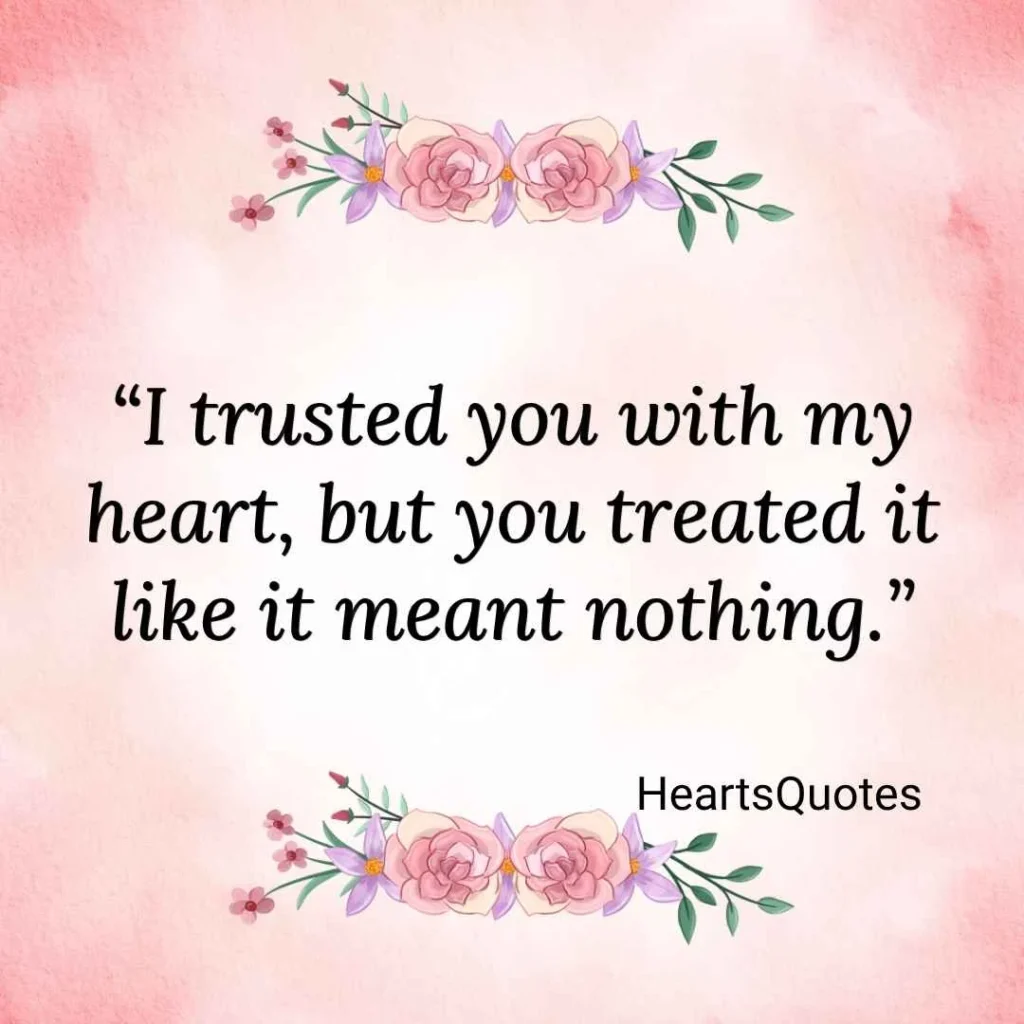
- “I trusted you with my heart, but you treated it like it meant nothing.”
Trust collapses when expectations of love are shattered by actions.
It reflects psychological pain of emotional betrayal and loss of safety.
: - “The deepest wound is not the goodbye, but the lie behind it.”
Lies damage emotional security more than physical separation.
It shows how deception reshapes memory and emotional attachment.
: - “You didn’t just leave me, you replaced me in my own story.”
Replacement creates identity confusion and emotional rejection trauma.
The mind struggles to accept emotional displacement in love.
: - “Betrayal teaches the heart what love should have protected.”
Pain becomes a teacher when trust is broken unexpectedly.
Emotional learning often comes through heartbreak experiences.
: - “I forgave what I shouldn’t have, and lost myself doing it.”
Over-forgiving leads to self-neglect and emotional imbalance.
It reflects psychological patterns of attachment and dependency.
: - “Love ended the moment honesty left the relationship.”
Without truth, emotional connection loses its foundation.
Trust erosion signals the collapse of romantic stability.
: - “Your silence after betrayal was louder than your goodbye.”
Silence amplifies emotional abandonment and unresolved feelings.
It shows the pain of unanswered emotional closure.
: - “I stayed loyal while you practiced leaving me slowly.”
One-sided loyalty creates emotional exhaustion and imbalance.
It reflects gradual emotional withdrawal by one partner.
: - “You broke promises like they were never meant to exist.”
Broken promises create long-term emotional distrust.
The mind associates love with instability and fear.
: - “What hurt most was realizing I meant less than I believed.”
Self-worth collapses when emotional value is questioned.
It represents deep psychological rejection sensitivity.
:
One-Sided Love That Never Returns
- “I loved you in silence while you loved someone else out loud.”
Unreturned love creates emotional invisibility and inner loneliness.
It reflects an imbalance between emotional investment and reality.
: - “My heart stayed where yours never visited.”
Emotional attachment remains even when connection is absent.
It shows psychological persistence of one-sided affection.
: - “You were my everything, but I was your option.”
Unequal emotional importance leads to deep self-doubt.
It highlights asymmetry in romantic attachment.
: - “I waited for love that was never meant for me.”
Waiting intensifies emotional dependency and hope cycles.
It reflects cognitive distortion in romantic expectations.
: - “You smiled at me while loving someone else in your heart.”
Mixed signals create emotional confusion and attachment pain.
It reveals hidden emotional duality in relationships.
: - “I built dreams where you only built exits.”
Emotional investment without reciprocity leads to heartbreak.
It symbolizes unbalanced future expectations.
: - “Loving you alone felt like drowning in silence.”
One-sided love produces emotional suffocation and isolation.
It reflects internal emotional overload without response.
: - “I gave you forever, you gave me uncertainty.”
Emotional insecurity grows from unclear intentions.
It highlights unstable romantic attachment patterns.
: - “My love was real even when yours was absent.”
Genuine emotion persists despite lack of reciprocation.
It shows strength and pain coexisting in love.
: - “I was there for you, but you were never mine.”
Emotional absence creates long-term psychological emptiness.
It reflects the pain of invisible emotional presence.
:
Breakup Pain That Lingers
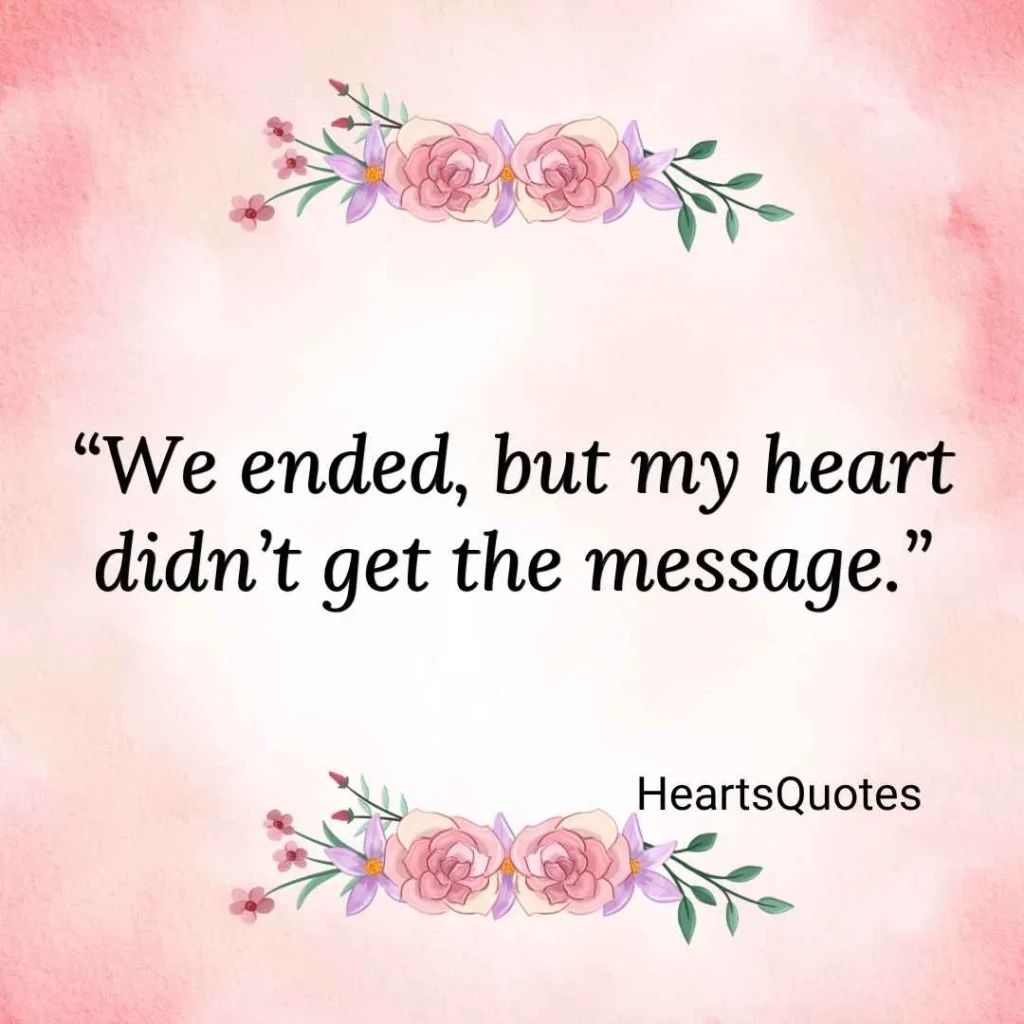
- “We ended, but my heart didn’t get the message.”
Emotional detachment often lags behind reality.
The brain resists accepting sudden relational endings.
: - “Breaking up with you felt like breaking myself.”
Identity fusion in love intensifies breakup pain.
It shows emotional dependency and loss of self.
: - “I smile outside while falling apart inside.”
Hidden grief creates emotional masking behavior.
It reflects psychological suppression of sadness.
: - “You left, and I stayed stuck in our memories.”
Memory fixation delays emotional healing after loss.
It shows cognitive looping in heartbreak.
: - “Goodbye was easy for you, unbearable for me.”
Emotional asymmetry defines breakup suffering.
It highlights unequal attachment strength.
: - “I miss the version of you that no longer exists.”
Idealization prolongs emotional attachment after separation.
It reflects nostalgic distortion of memory.
: - “Every song reminds me of what we lost.”
Emotional triggers reinforce grief cycles.
It shows associative memory in heartbreak psychology.
: - “We ended, but my love didn’t.”
Emotional persistence continues beyond relationship closure.
It reflects incomplete emotional detachment.
: - “I let you go, but I didn’t let go of us.”
Attachment bonds often survive conscious decisions.
It shows conflict between logic and emotion.
: - “Heartbreak is learning to breathe without someone you loved.”
Emotional recovery requires re-learning independence.
It reflects psychological adaptation after loss.
:
Missing Someone Who Is Gone
- “I miss you in ways I cannot explain.”
Emotional absence creates language limitations.
It reflects deep internalized attachment longing.
: - “Your absence is louder than your presence ever was.”
Loss intensifies emotional awareness of emptiness.
It shows heightened perception after separation.
: - “I still look for you in empty places.”
Habitual memory triggers false expectations of presence.
It reflects conditioned emotional searching.
: - “Missing you feels like forgetting how to breathe.”
Grief disrupts normal emotional regulation.
It symbolizes dependency on emotional connection.
: - “Every day without you feels unfinished.”
Emotional closure remains unresolved over time.
It shows psychological incompleteness after loss.
: - “I talk to your memory more than real people.”
Memory becomes a substitute for real connection.
It reflects internalized attachment behavior.
: - “You’re gone, but my heart still calls you.”
Emotional attachment persists beyond physical absence.
It shows enduring psychological bonding.
: - “I miss the love we never finished living.”
Unfulfilled relationships create lingering regret.
It reflects unresolved emotional potential.
: - “Even silence reminds me of you.”
Triggers become emotionally conditioned over time.
It shows deep associative memory impact.
: - “Missing you is my daily habit now.”
Grief becomes a repeated emotional routine.
It reflects chronic emotional longing.
:
Silent Suffering in Love
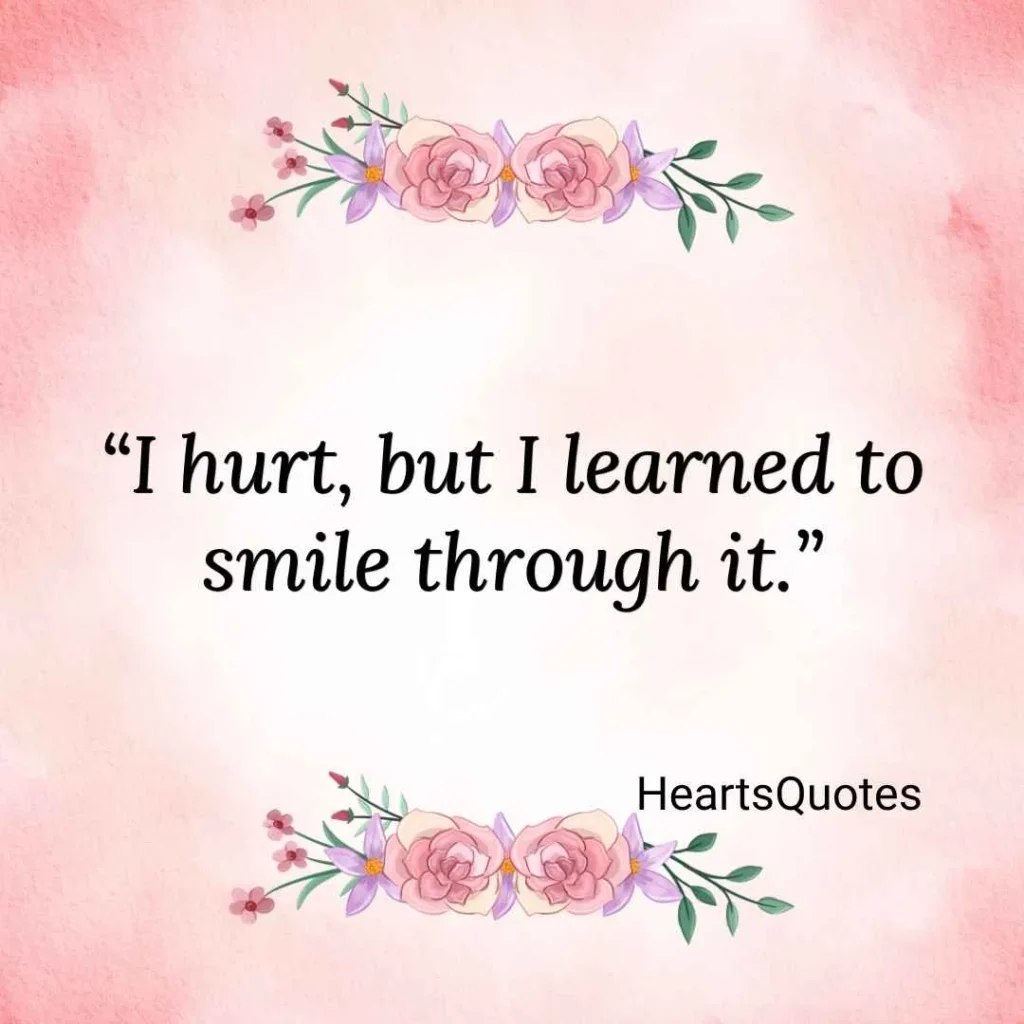
- “I hurt, but I learned to smile through it.”
Emotional suppression hides internal distress.
It reflects coping through masking emotions.
: - “No one sees the tears behind my calm face.”
Hidden grief often goes unnoticed socially.
It shows emotional isolation in suffering.
: - “I stopped talking about my pain because no one listened.”
Emotional withdrawal develops from invalidation.
It reflects learned silence in trauma.
: - “My heart screams, but my lips stay quiet.”
Internal conflict between emotion and expression.
It shows suppressed emotional release.
: - “I carry love and pain in the same breath.”
Mixed emotions create psychological tension.
It reflects emotional ambivalence.
: - “Silence became my way of surviving heartbreak.”
Emotional restraint becomes a defense mechanism.
It shows adaptive coping behavior.
: - “I act fine, but I’m breaking inside.”
Emotional dissonance defines hidden suffering.
It reflects internal-external mismatch.
: - “My sadness learned how to hide.”
Emotions adapt to avoid external judgment.
It shows psychological concealment strategies.
: - “I stopped explaining because no one understood.”
Communication breakdown increases emotional isolation.
It reflects withdrawal from emotional sharing.
: - “Behind every quiet person is a loud heartbreak.”
External silence often masks internal chaos.
It shows depth of unspoken emotional pain.
:
Frequently Asked Questions
What are sad quotes about love used for?
They help express emotional pain and give comfort during heartbreak.
Why do sad love quotes feel relatable?
Because they reflect real emotional experiences many people go through.
Can sad love quotes help healing?
Yes, they validate feelings and support emotional release and reflection.
Why do people read heartbreak quotes?
To feel understood and less alone in their emotional struggles.
Conclusion
Sad love quotes remind us that heartbreak is a shared human experience.
They give voice to emotions we often cannot express in real life.
Through pain, we begin to understand the depth of our own hearts.
Even broken love teaches lessons about strength, patience, and self-worth.
And in that understanding, healing slowly begins within us again.

Hi, I’m Amelia Hartwell, and I believe every meaningful quote has a story, a lesson, and a feeling behind it. My passion is turning powerful words into inspiring content that helps readers discover hope, confidence, and motivation.
I enjoy exploring famous sayings, life quotes, and positive affirmations that connect with people from different backgrounds. My goal is to share timeless wisdom that encourages kindness, courage, and personal growth.
I am the author of Letters of Inspiration and The Beauty of Simple Words, two books dedicated to celebrating the power of thoughts and expressions that inspire generations.
 Ethan Whitmore
 lio massi