Sometimes love leaves behind feelings that words can barely explain. I know how deeply a broken heart can hurt, and you may know that feeling too. When someone you love becomes the reason for your tears, even the happiest memories can suddenly feel painful.
I wish I could tell you that every painful goodbye becomes easy with time, but some memories stay quietly in your heart. You smile, you move on, yet a small part of you still wonders what went wrong. If you have ever loved someone deeply and lost them, these sad quotes about love and pain may put into words the feelings you could never say aloud.
You don’t have to hide what you feel. I believe that sometimes reading the right words can make a heavy heart feel understood. These quotes capture heartbreak, loneliness, lost love, and the pain of caring for someone who is no longer yours.
Love That Hurts Deeply
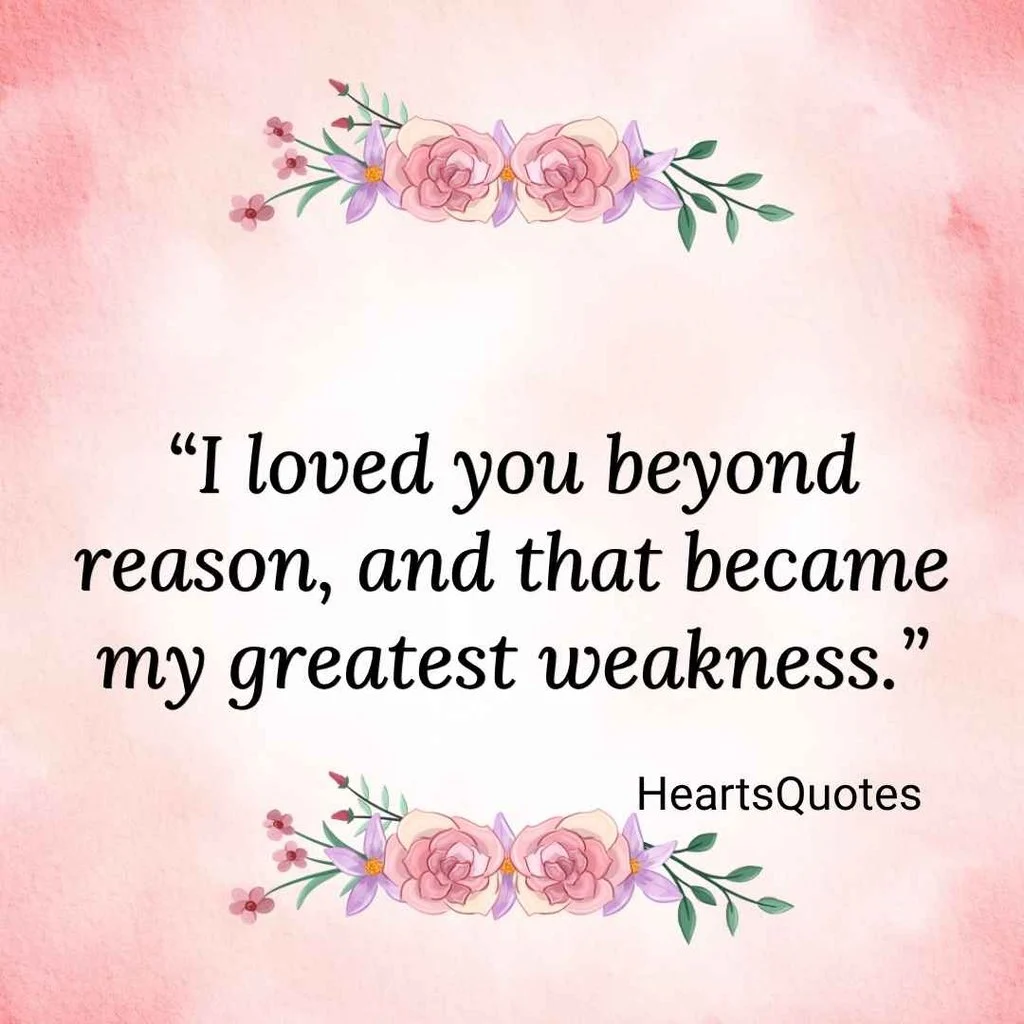
- “I loved you beyond reason, and that became my greatest weakness.”
Explanation:
This reflects how emotional attachment can overpower logic and self-protection.
Psychologically, over-attachment often leads to emotional dependency and pain. - “Sometimes love is just another word for silent suffering.”
Explanation:
Love without balance can turn into emotional suppression and inner conflict.
It highlights how unmet emotional needs create long-term psychological distress. - “You were my home, but you also became my storm.”
Explanation:
This shows emotional duality where a person becomes both comfort and pain.
It represents attachment theory and emotional insecurity in relationships. - “I stayed too long in a love that was already gone.”
Explanation:
This reveals denial and emotional resistance to accepting relationship endings.
It reflects the human tendency to cling to familiarity even when it hurts. - “Love broke me in places I never knew existed.”
Explanation:
Emotional trauma can affect hidden layers of self-identity and trust.
It shows how heartbreak reshapes psychological boundaries and self-worth. - “I mistook your attention for forever.”
Explanation:
This highlights confusion between temporary affection and lifelong commitment.
It reflects cognitive bias in interpreting emotional signals. - “The deeper I loved, the harder I fell apart.”
Explanation:
Intense emotional investment increases vulnerability to heartbreak.
It shows the correlation between depth of love and emotional risk. - “You didn’t leave loudly, you left in silence—and that hurt more.”
Explanation:
Emotional abandonment without closure intensifies psychological pain.
Silence often creates unresolved trauma and lingering emotional confusion. - “My love was real, but your presence was temporary.”
Explanation:
This contrast highlights imbalance between emotional depth and inconsistency.
It reflects unreciprocated emotional investment in relationships. - “I gave you my heart, and you returned uncertainty.”
Explanation:
Emotional mismatch creates insecurity and self-doubt in relationships.
It emphasizes the pain of unmet emotional expectations.
Broken Heart and Emotional Pain
- “A broken heart still beats, but it never feels the same.”
Explanation:
Emotional trauma changes perception of love and trust permanently.
It shows how heartbreak alters emotional sensitivity. - “Pain is what remains when love forgets to stay.”
Explanation:
This reflects emotional void left after attachment loss.
It highlights psychological emptiness after separation. - “I smile so no one sees how broken I really am.”
Explanation:
This represents emotional masking and suppression of vulnerability.
It is linked to coping mechanisms used to hide distress. - “Every heartbeat reminds me of what I lost.”
Explanation:
Memory association strengthens emotional pain triggers.
It shows how trauma becomes linked with daily experiences. - “My heart didn’t break once; it kept breaking slowly.”
Explanation:
Emotional suffering is often gradual rather than sudden.
It reflects prolonged grief and emotional exhaustion. - “I learned that goodbyes can echo forever.”
Explanation:
Emotional memory can prolong pain long after separation.
It shows how unresolved endings affect mental health. - “Loving you hurt, but forgetting you hurts more.”
Explanation:
This highlights conflict between memory attachment and emotional release.
It reflects cognitive-emotional dissonance in grief. - “You left, and my world forgot how to feel whole.”
Explanation:
Loss can disrupt emotional stability and identity perception.
It shows dependency created through deep emotional bonding. - “Some wounds are invisible but bleed the most.”
Explanation:
Emotional pain often lacks physical expression but is deeply felt.
It reflects hidden psychological suffering. - “I didn’t lose you, I lost myself in loving you.”
Explanation:
Over-attachment can lead to identity dilution in relationships.
It highlights emotional dependency and self-neglect.
Silent Tears and Unspoken Feelings
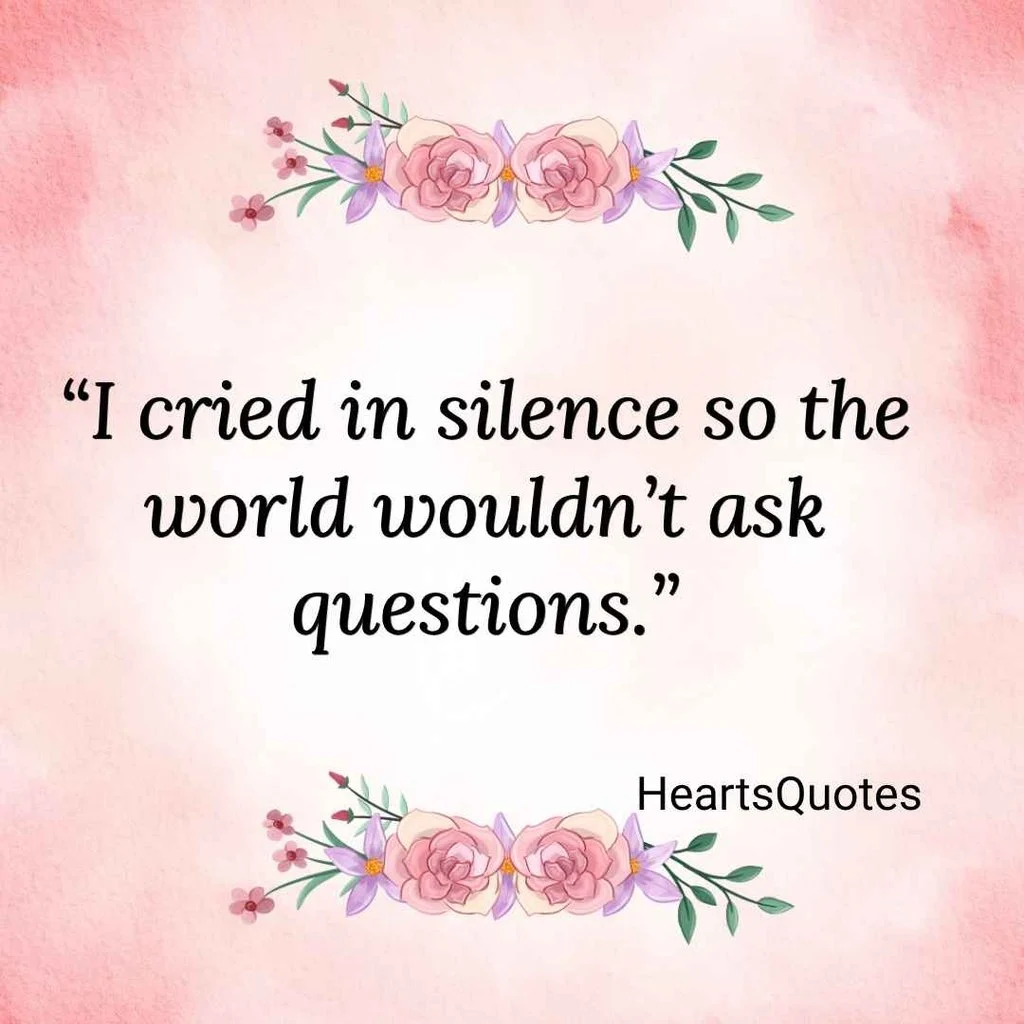
- “I cried in silence so the world wouldn’t ask questions.”
Explanation:
Emotional suppression is a common response to vulnerability.
It shows how people hide pain to maintain social appearance. - “My eyes spoke what my lips could never say.”
Explanation:
Nonverbal expression often reveals deeper emotional truth.
It highlights emotional communication beyond words. - “Silence became the language of my broken heart.”
Explanation:
Emotional withdrawal replaces verbal communication during grief.
It reflects internalized sadness and isolation. - “I held my tears like secrets no one should know.”
Explanation:
Emotional secrecy often stems from fear of judgment.
It shows suppression as a coping mechanism. - “Every silent night carried a louder pain inside me.”
Explanation:
Quiet environments intensify internal emotional processing.
It reflects loneliness and introspective suffering. - “I stopped explaining because no one truly listened.”
Explanation:
Emotional neglect leads to withdrawal from communication.
It shows breakdown of emotional validation. - “My heart speaks, but only I can hear it crying.”
Explanation:
Inner emotional dialogue often remains unshared with others.
It reflects deep personal emotional isolation. - “Tears fell quietly so my pain wouldn’t disturb anyone.”
Explanation:
This shows self-sacrifice in emotional expression.
It highlights suppression of grief for social comfort. - “I became silent because words could not fix anything.”
Explanation:
Emotional exhaustion often leads to communication shutdown.
It reflects acceptance of unresolved emotional pain. - “Behind my silence lives a story no one knows.”
Explanation:
Every quiet person may carry deep emotional experiences.
It emphasizes hidden emotional narratives in humans.
Memories That Won’t Fade
- “Your memory visits me more than you ever did.”
Explanation:
Emotional memory often outlasts physical presence.
It shows how the mind preserves attachment after loss. - “I moved on, but my memories refused to leave.”
Explanation:
Cognitive dissonance exists between healing and remembrance.
It reflects persistence of emotional imprinting. - “Every place still remembers what we used to be.”
Explanation:
Environmental triggers reinforce emotional recollection.
It shows associative memory in heartbreak. - “I forget your face, but not how you made me feel.”
Explanation:
Emotional memory is stronger than visual memory.
It highlights affective retention in psychology. - “Memories hurt most when they feel almost real again.”
Explanation:
Vivid recollections can recreate emotional pain.
It reflects reactivation of stored emotional experiences. - “I carry you in moments I wish I could erase.”
Explanation:
Emotional attachment persists in unwanted memories.
It shows intrusive thoughts in grief processing. - “Time moves on, but memories stay where love was.”
Explanation:
Emotional anchoring keeps past relationships psychologically alive.
It reflects resistance of emotional memory to time. - “I learned that memories don’t ask permission to return.”
Explanation:
Intrusive recall is a natural part of emotional trauma.
It shows lack of control over emotional remembrance. - “You became a memory I can never outgrow.”
Explanation:
Emotional growth does not erase deep attachment.
It reflects lasting psychological imprint of love. - “Even happiness reminds me of what I lost.”
Explanation:
Positive emotions can trigger emotional contrast and grief.
It highlights emotional association between joy and loss.
Healing After Love Loss
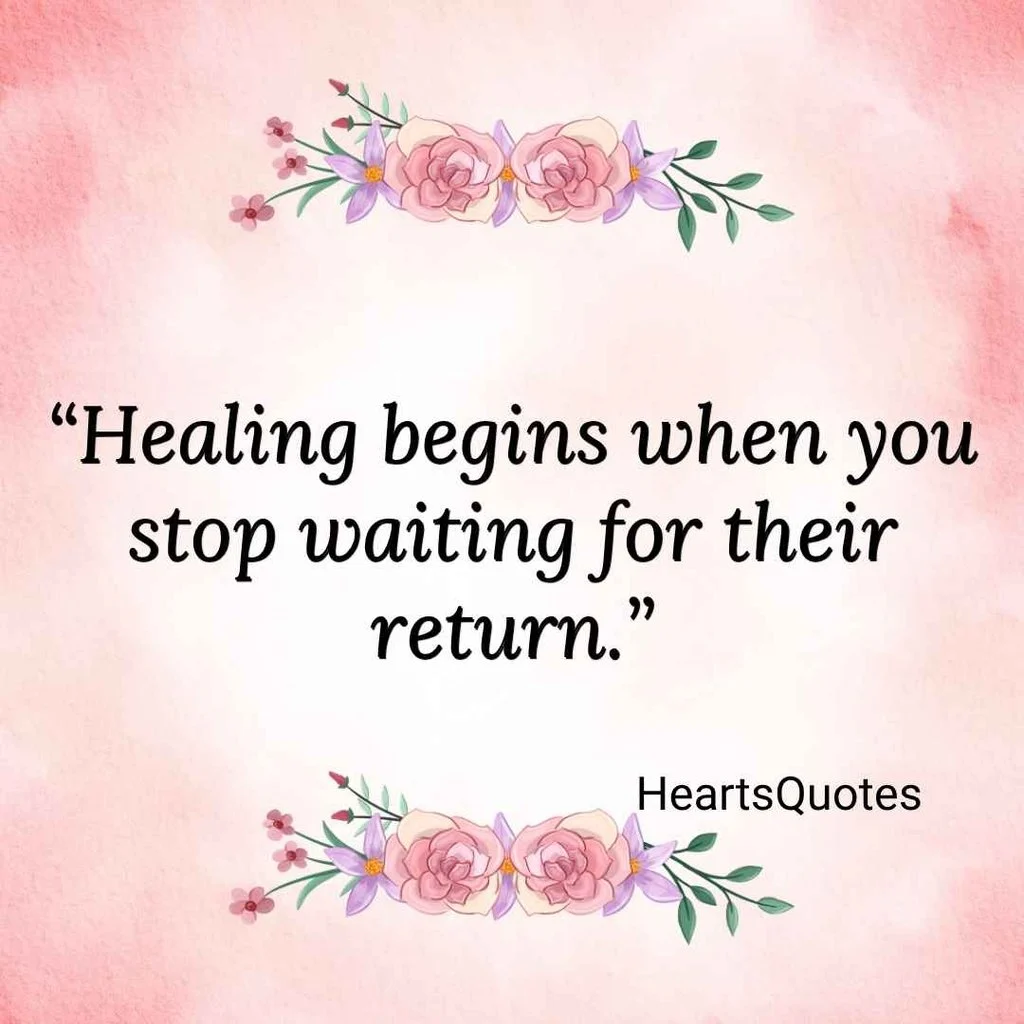
- “Healing begins when you stop waiting for their return.”
Explanation:
Acceptance is the first step in emotional recovery.
It reflects psychological closure in grief stages. - “I survived the pain, and that is my strength.”
Explanation:
Resilience develops through overcoming emotional trauma.
It highlights post-traumatic emotional growth. - “Letting go hurts, but holding on destroys more.”
Explanation:
Emotional release prevents prolonged psychological damage.
It reflects necessity of detachment for healing. - “My heart is learning to beat without you.”
Explanation:
Recovery involves rebuilding emotional independence.
It shows adaptation after attachment loss. - “I am not the same, but I am still whole.”
Explanation:
Identity evolves after emotional transformation.
It reflects resilience and self-reconstruction. - “Time didn’t erase pain, it taught me strength.”
Explanation:
Healing is gradual emotional restructuring, not forgetting.
It shows adaptive coping through time. - “I forgave you, not for you, but for my peace.”
Explanation:
Forgiveness is a self-healing psychological process.
It reduces emotional burden and resentment. - “What hurt me once now teaches me how to love better.”
Explanation:
Pain becomes a foundation for emotional intelligence.
It reflects growth through emotional learning. - “I found myself in the pieces you left behind.”
Explanation:
Self-discovery often follows emotional loss.
It shows reconstruction of identity after heartbreak. - “Healing is slow, but so is forgetting pain.”
Explanation:
Emotional recovery is a gradual neurological process.
It reflects realistic expectations of healing timelines.
Frequently Asked Questions
What are sad quotes about love and pain used for?
They help express deep emotional feelings and provide comfort during heartbreak.
Why do people relate to heartbreak quotes?
Because they reflect real human emotions and shared psychological experiences of loss.
Can sad love quotes help healing?
Yes, they can validate emotions and support emotional processing during grief.
Are heartbreak feelings normal?
Yes, they are a natural psychological response to emotional attachment and loss.
Conclusion
Love brings both light and darkness into human experience.
Pain from love teaches emotional strength and deeper self-awareness.
Every heartbreak carries lessons hidden within its silence and memories.
You grow slowly through the pieces that once broke you completely.
In the end, healing is not forgetting it is learning to live again.

I am Ethan Whitmore, a writer who believes that words have the power to inspire, motivate, and bring people closer to their dreams. I love creating meaningful content that captures emotions, life lessons, and moments of reflection. My writing focuses on confidence, personal growth, relationships, and the simple truths that make life beautiful.
Through my books, I share stories and ideas that encourage readers to stay strong, embrace challenges, and find inspiration in everyday experiences. My goal is to create words that connect with hearts and leave a lasting impact.
Books by Ethan Whitmore:
- The Confidence Edge: Bold Moves for Unshakable Self-Belief
- Resilient by Design: Proven Strategies to Thrive Through Life’s Challenges
 Amelia Hartwell
 lio massi